For Coaches and Teachers, Resources, SCAMPER Technique

Getting the Most out of SCAMPER: P is for Put to Another Use

So far, most of the SCAMPER technique has been about how to change ideas and things, but P is all about recognizing the qualities that are already inherent in an object or attitude.

For instance, dice are used to tell you how far to advance during a board game but they could be used to practice math problems. Playing cards are used in lots of games to take tricks, but a group could decide that the person who draws the low card has to go out to get more snacks. Butter is delicious on toast, but as seen at the MN State Fair it can be a great material for sculpting. Toothpicks can get spinach out of your bicuspids, but they are also used to make appetizers easier to eat. Styrofoam is a packing material, but it also floats so if a person needs an emergency life preserver it would do in pinch to save your life.
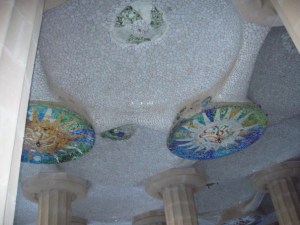
Parque Guell ceilingLately, there has been a trend to take waste products and turn them into something new. For example, those nice tote bags that you can buy in grocery and convenience stores are often made out of recycled plastic bags. Antoni Gaudi was a Spanish artist who took broken plates and tiles and made them into beautiful artwork. In one of my favorite episodes of Mythbusters the team took old newspapers, soaked them in water and froze them in a boat-shaped mold. They were able to add and engine and motor around a lake for almost an hour!

So if you are having a practice session before a Meet, think about bringing different objects and giving the students a chance to think about all the different things they could be used for.

Happy brainstorming!

For Coaches and Teachers

10 Days Left to Register

Don’t forget, the deadline for registering teams for the 2014-2015 season is November 14 and the payment deadline is December 1.

Information about Starting a Team.

Visit the Registration Page.

Questions? Please don’t hesitate to contact us at info@usacademictriathlon.com.

For Coaches and Teachers, Mind Sprints, Resources, SCAMPER Technique

Getting the Most out of SCAMPER: M is for Magnify/Minify

Here we are the the midpoint of our SCAMPER acronym, but if you missed the background, S (Substitute), C (combine) or A (adapt) the posts are all waiting for you. So onwards and upwards, or as the case would be, bigwards and smallwards.

The M of SCAMPER stands for “Magnify,” or making things bigger. In a pinch, this is a great fallback when stuck during a brainstorming session or thinking about ways to change an object to put it to a new use. For instance, if you make a house key much larger, it can be used not only to open a comically large lock, but the big, sharp teeth would make it a great saw. Or a crouton could be an ideal raft in a giant bowl of soup. With a big enough tube of lipstick a person could paint a whole building, though I would avoid brush up against that exterior, the stains would be a nightmare!

On the other hand, the opposite side of magnify is “minify”, ie making things smaller. If a person were the size of Pekinese then they could live comfortably in a kennel, or if they were even smaller a whole town could move into your ventilation system. If pizzas are bite-sized you would be able to sample many different varieties without all those calories. There are lots of things that would be convenient to carry in your pocket if they were only a few inches tall, and think of all the cool stuff that could be worn as jewelry!

Another thing that can be made bigger or smaller is an idea. Taking “selfies” became a huge craze, but what about the next big thing for internet? Electric cars exist, but could there be consequences if everyone in the world had one? And right now in scientific circles people have re-opened the debate about whether or not Pluto is a planet. They have to decide if they are going to expand or limit the definition of what constitutes a planet, and there will be consequences of that decision.

So if you are looking for something to do during a USAT practice, you could try having your students practice making things bigger and smaller in their minds, and think of new uses for them once they’ve been changed.

For Coaches and Teachers, For Hosts and Facilitators, For Parents

Starting a USAT Team

The SCAMPER series will be back next week, but with only one month left to register we wanted to get some information out to you about how to start a new team if you are interested in coaching, or if you have a child who you think would enjoy the program.

Step 1: Identify 4-5 students, plus 2 alternates, in grades 5 through 8, to form a competition team. It might be fun to come up with a team name and, if funds are available, a team shirt/jersey for competitions! Some teams are made up students who are already friends, and some teams are created as a way to make new ones among people who are just interested in exploring their creative side in a fun and supportive way.

Step 2: Recruit another teacher or parent to serve as an additional coach or volunteer. Each team needs a Head Coach to successfully run a team, though additional coaches or adults (16 years or older) may be needed. Each team must provide at least one coach/volunteer to assist with the successful management of each Round Robin or Regional meet.

Step 3: Register your team with the national US Academic Triathlon office by Nov. 14, 2014. Final payment is due by Dec. 14, 2014. To register, complete either the Xcel spreadsheet or the PDF registration forms on the Registration page. You can fax, email, or snail mail it to the contact information below:

US Academic Triathlon
P.O. Box 333
Northfield, MN 55057
Fax: 507.301.3512
State Coordinator Email: sarahjksheldon@gmail.com

Step 4: Review the Program Manual, which will be sent electronically to first-time coaches upon successful registration, or can be downloaded here: Program Manual. Make sure you are familiar with all expectations of the Head Coach, additional coaches/volunteers, team members, and the competition process. During the course of your USAT season, you may be asked to host a meet at your school. The Program Manual and the State Coordinator will be your essential resources for hosting your first USAT Meet.

Step 5: Create your team’s Competition Kit – your team’s box of essentials necessary to work through any problem thrown at them during a Meet. See the Program Manual for details of what goes in your team’s Competition Kit.

Step 6: Practice! You can find practice problems on this site. You additional tips and practice ideas you can subscribe to the USAT blog or follow us on Facebook.

For questions about recuitment, please contact Sarah Sheldon at sarahjksheldon@gmail.com.

For Coaches and Teachers, For Kids, For Parents, Resources, SCAMPER Technique

Getting the Most out of SCAMPER: A is for Adapt

One the defining characteristics of human beings is that we are great at adapting. You can find people all over the world in different climates, using different materials to make our homes and eating different food depending on what is available. We use tools to accomplish things we cannot do with our own two hands, and machines that are far stronger than any one person could ever be. More than any other creature on Earth, we are able to adapt to new challenges, and adapt our environment to suit us. And this all possible because of our ability to think creatively.

I asked Peggy Sheldon, the founder of USAT, what she thought about the word adapt, and I really liked her answer. She told me, “It is about seeing and using the patterns in the place, space, and time and using creativity to re-imagine landscape, social, and conceptual systems.” The emphasis on pattern recognition, another thing our big human brains are extremely adept at, is a key part of adaptation. For instance, the delicious Spanish cuisine known as “tapas” did not come about spontaneously. The story goes that there once was an owner of a tavern who had a space outside for his patrons to sit. This outdoor space was in the shade of a large tree, which made it cooler and more comfortable to sit outside, but the leaves and seeds from the tree would sometimes fall into the patrons’ drinks. The patrons would get annoyed and decide to take their business elsewhere. To counteract this problem, the owner started to serve his drinks with a thin slice of Serrano ham across the mouth of the glass to act as a cover, or “tapa”, to keep the seeds out. He saw a pattern of cause (seeds) and effect (loss of business) and adapted to the problem.

As it turned out, the patrons would finish their drinks and then eat the salty ham, which in turn made them more thirsty, which then led to them ordering another round of drinks. Pretty soon, the owner was offering different kinds of salty snacks free of charge, and other people started to catch on to this ingenious idea. So now in the Southern parts of Spain you rarely order a drink without also getting a small plate of olives or some other salty snack along with it free of charge. And from there, chefs started to develop dishes that are almost exclusively served in this way, and a whole new cuisine was born and continued to spread to different countries.

Adaptation is a method of changing actions and attitudes in response to recognizing the need for that change, and this takes a flexible and creative mind. During the course of a USAT season, or even in the middle of a Mind Sprint, students may find it advantageous to adapt. A strategy that seems like a good idea “on paper” may turn out to take too much time or they lose track of the original question they are being asked to answer. The events in USAT are all timed and the season is short, so to be the most successful at Meets students need to be able to quickly evaluate if strategies work and how to change those strategies and try new things to improve. One way coaches and parents can help this process it to take some time after each Meet to talk about what worked and what didn’t work, and to brainstorm new ways to Meet those challenges should they arise again. And it important to remember that changing your mind or your strategy midstream doesn’t mean the first idea was “bad,” but perhaps with some modification you can come to the “best” conclusion.