Elements of Storytelling, For Coaches and Teachers, For Kids, P.A.R.T.Y. in a Box, Resources

Elements of Storytelling: The Middle

Last week, we took a look at the best place for a story to begin, and how to get the most out of the first minute of a P.A.R.T.Y. in a Box skit. Now, it’s time to take a look at what the middle of a story has to offer.

If you’ve ever been a coach or judge for P.A.R.T.Y. in a Box, you know that students rarely use their full five minutes. They end up rushing because they are afraid of the penalty for going over, or they didn’t plan a very long story to begin with. The middle is often sacrificed in the race to the end, but the middle is actually the “meat” of any story. A great way to help your students understand how much time they really have is to set a five-minute timer, then make them sit in silence until it goes off. Suddenly, those five minutes feel like an eternity! If you do this exercise before each Meet, or even just once at the beginning of every season, it will make a big impact on the length (and by extension quality) of the skits your students plan and perform.

Debate

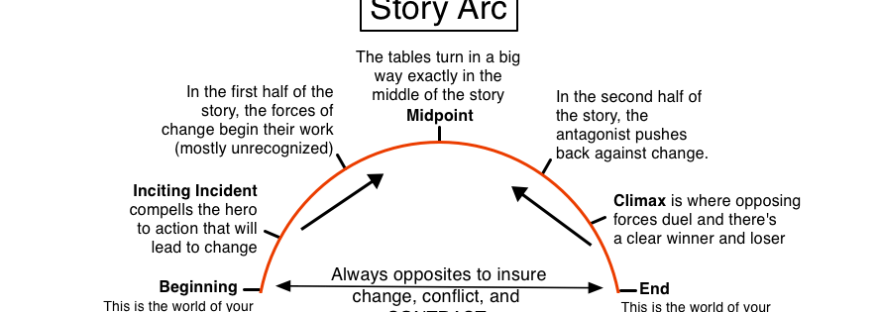
In the last Elements of Storytelling post, we talked about the opening image, establishing the protagonist’s identity by using a State of Perfection (SOP) or State of Imperfection (SOI), and the purpose of an inciting incident. Right after the first event occurs to knock the protagonist out of their SOP/SOI, good stories show at least a moment of debate. This doesn’t necessarily mean that characters have to actually discuss whether or not to go on the adventure and why, but they certainly could. An exchange of even a sentence or two at this stage is a great way to really bring the theme to the forefront of the skit.

For example, during our Round Robin #3 Meet, we asked our Triathletes to examine the idea of ingroups and outgroups, and the power of groups to shape our actions. If the protagonist experiences an inciting incident where they are faced with a decision to hang out with the soccer team at the expense of their best friend’s feelings, the decision-making process can easily be shown through a quick discussion between the protagonist and a teammate who thinks a friend isn’t worth their time. This will clearly illustrate the theme, and the audience will know exactly what the conflict is about.

One advantage of a live performance rather than a book is that characters can also make asides to the audience. Shakespeare often wrote the private thoughts of his characters as monologues, or brief moments where they step out of the world of the story to say something directly to the people who are watching. This is a great way to bring the audience deeper into the story, and has the added benefit of making thoughts and motivations transparent. You have to establish the moment of hesitation as well as the moment the protagonist takes the plunge in order for the story to feel compelling.
Plot Point #1

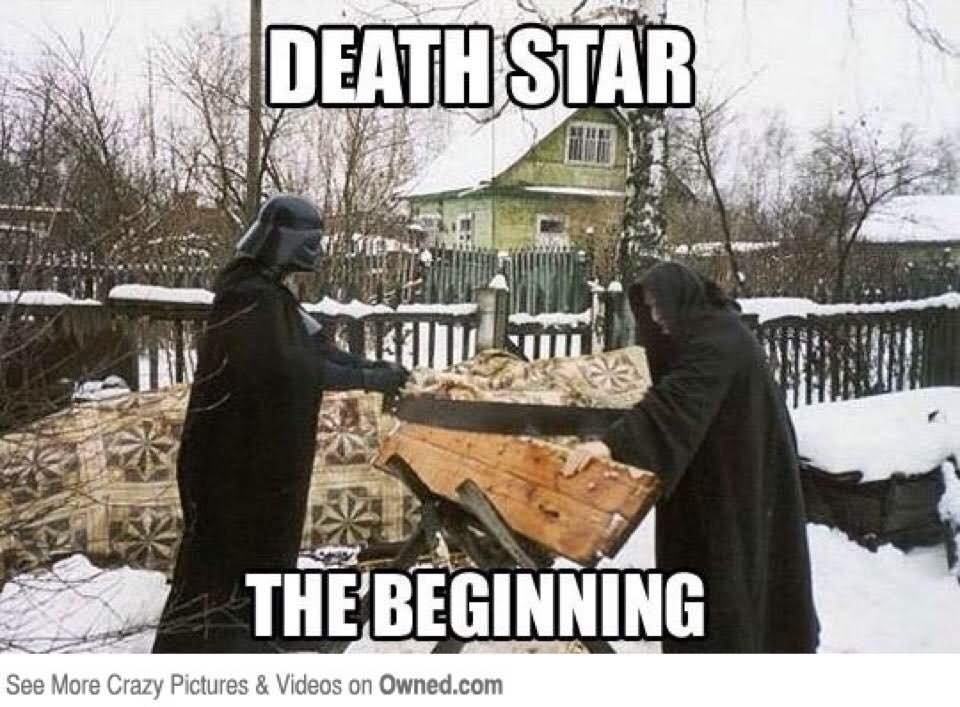
Not long after the debate, it’s a good idea to have a distinctive plot point. This should be the first time the antagonist (or antagonistic forces) are fully realized for the audience. A lot of the time, this is a scene where the protagonist isn’t even present. The audience has the chance to see the antagonist, their motives, and understand what is at stake if the protagonist fails at defeating them. If we use the original Star Wars movie as an example, this is the scene where we find out about the Death Star. Sure, we met Darth Vader as part of the inciting incident, but he isn’t the biggest threat to the safety of the galaxy. The evil empire and its planet-killing laser, on the other hand, are not to be trifled with.

This is a step that often gets skipped in a P.A.R.T.Y. in a Box skit, but actually has a lot of potential for creativity and earning points. If you can give the audience an interesting villain, and maybe even one with a special talent or funny way of looking at the world, it will definitely catch the attention of the judges. Remember, the antagonist is the opposite of the protagonist, and they are both there in order to show the audience different aspects of the theme. Taking 30 seconds to really hone in on the conflict and the consequences makes it easy for the audience to follow your tale, and lets the judges know you know what is being asked of your team. Plus, it’s a great opportunity to show off your team’s artistic skills with a second backdrop!

Midpoint

“Wait, isn’t the whole post about the middle? you ask. It sure is! But the Midpoint is a very specific moment within the middle section of a story. Specifically, it is the moment when the protagonist either thinks they succeeded but has actually failed (false peak), or thinks they have failed but actually succeeded (false collapse). For our soccer player protagonist torn between the group and a friend, the false peak occurs when they have gained acceptance from the group. They think they’ve gotten what they truly want, but will ultimately find that it doesn’t actually make them happy.

In a story with a false collapse, let’s look at Star Wars again. The Millennium Falcon comes out of light speed on its way to Alderaan, only to find out the planet has been blown to bits. The crew are captured by Vader, Obi Wan is killed, and all hope seems to be lost. Except of course that they couldn’t actually win the day in the end if they weren’t captured at this point in the film. If Obi Wan was still alive later on, there would be no disembodied voice urging Luke to use the Force to make the impossible shot and win the day. Everyone loves to root for an underdog, and providing an event in the plot where the protagonist is at a disadvantage can make a big emotional impact on the audience when they see it reversed later.

But we’ll save the rest of our tips for utilizing the power of reversals for our final installment of the series: crafting a satisfying and exciting ending.
Enrichment Activities, For Coaches and Teachers, For Kids

Keep the Fun of Round Robin #3 Going with our “Librarians on Ladders” Extension

During Round Robin 3, we challenged our Triathletes to brainstorm new meanings for familiar acronyms. There is only 10 minutes allowed for any Mind Sprint, so we could only offer a few phrases during the challenge. As you get ready for the Regional competition on March 9, we wanted to offer another chance to play this game, as well as some ways to interact with acronyms that we couldn’t do in the short time within a Mind Sprint.

Objective: To use divergent thinking even when seeing familiar patterns.

Conducting the enrichment: An activity for one or more people. Parents and coaches can play along with the students, so don’t be shy! You will also need some way to record your answers.

An acronym is a series of letters that represent a phrase. Your challenge will be to brainstorm acronyms we use in our daily lives, then come up with new phrases to fit them.

Part 1

Take out some scratch paper and a writing utensil. You could use a word processor if you don’t have any paper, but we recommend writing by hand for brainstorming to help engage your brain on a more tactile level.

Divide your paper into four parts, and label each section 2-5. In these areas, you will record acronyms with the corresponding number of letters. If you think of any that are six letters or longer, record them in the “5” section.

Set a timer for two minutes. When your time begins, record as many acronyms as you can, and put them into the different sections of your page. Try to think of at least one acronym for each of your numbered sections. You will use these acronyms for Part 2.

If you are doing this activity with multiple students, you can make it a friendly competition. After the time is up, compare your lists, and award 2 points for each 2-letter answer, 3 points for each 3-letter answer, etc. When the scores are compiled, take a look at the different techniques other students used for getting their scores. Were there any strategies that people used to generate more words that others could use in the future? Did it matter how long the words really were? Or was quantity of answers vs. quantity of letters a better strategy?

Part 2

Once you have a list of acronyms, it’s time for a new piece of paper. Your next task will be to take this list and brainstorm new phrases that fit the pattern of letters.

Acronyms are usually made up of the first letters in each word of the phrase, but sometimes little words are left out, such as when the United States of America is abbreviated as USA. You may include linking words in your answers that hold the phrase together but don’t use up a letter. Take a moment to add the phrases for each of your acronyms to your list. If you aren’t certain exactly what it stands for, double check on the internet or ask the other students who are playing the game to reach a consensus.

To make things a little more challenging, there is one condition of your new acronyms. You may not use any of the words in the original phrase in your answers. So for LOL, you couldn’t use the words “laugh,” “out,” or “loud,” but you could say Librarians On Ladders or Leather Over Lace.

If you are playing alone, set a new timer for 30 seconds. Choose any acronym from your list, and use the 30 seconds to come up with new phrases. Longer phrases offer a bigger challenge, so you may want to start with 2- or 3-letter acronyms to begin. Repeat the process at least five times with different acronyms. After you’ve done a few shorter words, move on to longer ones.

If you are playing as a group, you could follow the instructions above and compare your answers. Alternatively, you could take turns using acronyms from each other’s lists and do the brainstorming as a group. It can be really fun to do this as a verbal activity rather than keeping it all on paper, but you may also want to assign one person to record all of the different answers.

Just for Fun

Choose one of more of your favorite new phrases and create an illustration or logo to go along with it.

If you want to share your lists, experiences, or illustrations, we’d love to post them here on the website! You can email your material to Alison@USAcademicTriathlon.com.

Elements of Storytelling, For Coaches and Teachers, For Kids, P.A.R.T.Y. in a Box, Resources

Elements of Storytelling: The Beginning

Welcome back for another installment of our series about how to craft a compelling story and get the right message across. (If you haven’t read our first P.A.R.T.Y. in a Box series full of tips for getting noticed, getting higher scores, and crafting awesome costumes and props, make sure to check that one out, too!)

So far in Elements of Storytelling, we’ve addressed the importance of themes, protagonists, and antagonists. Now, it’s time to take a look at how to structure a story and use the five minutes allotted to the skit to the best advantage. With so little time both to plan and to perform, it’s important to choose the right starting point.

Contrary to what Maria has to say on the matter, good stories should start as close to the central conflict as possible. If your protagonist is the painter Michelangelo, it really isn’t that important to see how he learned to walk or the first time he tried spaghetti. Almost everybody walks, so that sort of detail won’t do much good to help establish who he is or what the story is going to be about. If there are 30 seconds at the beginning that don’t directly relate to the theme or plot, then that is 30 seconds wasted.

Set the Scene

On the other hand, if the audience sees someone laying on their back and pretending to paint, that already starts a chain reaction in their brains to figure out who they are seeing. If they have ever heard about the Sistine Chapel ceiling he painted, the audience might be able to guess without any further prompting from a narrator or from dialogue. But just to be safe, it’s a good idea to drop in the name of your protagonist within the first 10 seconds of the play.

Movies and books sometimes include a prologue before a story begins in order to give the audience backstory (eg Lord of the Rings, Stardust), but for USAT this isn’t going to be the best approach. The opening image and establishing the protagonist’s “outsider” status tells the people watching (most importantly, the judges) who they need to be paying attention to from the beginning.

The beginning of a P.A.R.T.Y. skit is also a great time to let the backdrops, props, and costumes do a lot of the heavy lifting for you. If the background shows a forest, the audience already has a lot of information to go on. If there are people sitting in a circle on the ground in front of those trees pretending to cook, the audience can make a reasonable guess they are probably looking at a camping trip. Add a sash with scout badges, and we know even more.

These sorts of visual cues are very important and establish your opening image. The protagonist should be present, and will either be in a state of perfection (SOP) or state of imperfection (SOI). In an SOP, they should be happy and comfortable with the world, and no matter what happens in the story, the goal will be to return them to their SOP. This state can’t last very long, and losing it should be directly tied to the conflict and theme. If a story begins with a SOI, then the ending should be working toward a reversal of fortune or attitude at the end.

How do These Terms Apply?

Let’s continue with our camping scenario. A group of Wilderness Scouts is sitting around the fire. One of the scouts is having an awesome time, and the rest are complaining about the bugs, the smoke, and the cold. The protagonist must be the happy camper in their SOP, because remember, protagonists are the oddballs and outsiders.

Then, something happens (called the inciting incident) that forces the protagonist out of their SOP and into the story. Perhaps it’s a flash flood, alien invasion, or rift in time, but something must occur to send the protagonist on an adventure. If you wanted to start with the same scenario but using a SOI instead, the protagonist is the only person who isn’t having a good time before the inciting incident occurs.

After the inciting incident, which should happen no later than one minute into the skit, the story really takes off. Stay tuned for our next Elements of Storytelling post to find out how to get the most out of the middle.

Elements of Storytelling, For Coaches and Teachers, For Kids, P.A.R.T.Y. in a Box, Resources

Elements of Storytelling: The Antagonist

So far in this series, we’ve covered themes and protagonists. This post is to help our Triathletes get a little insight into crafting the perfect villain for their P.A.R.T.Y. in a Box skits to help the first two items really shine.

In short, an antagonist is the “bad guy” in a story. This person, group, or organization has goals that are directly at odds with the goals of the protagonist. They more than likely create the problem that the protagonist faces because they exhibit negative traits such as greed and selfishness. This could be a shady government, a mad scientist, or the “popular” kids at school.

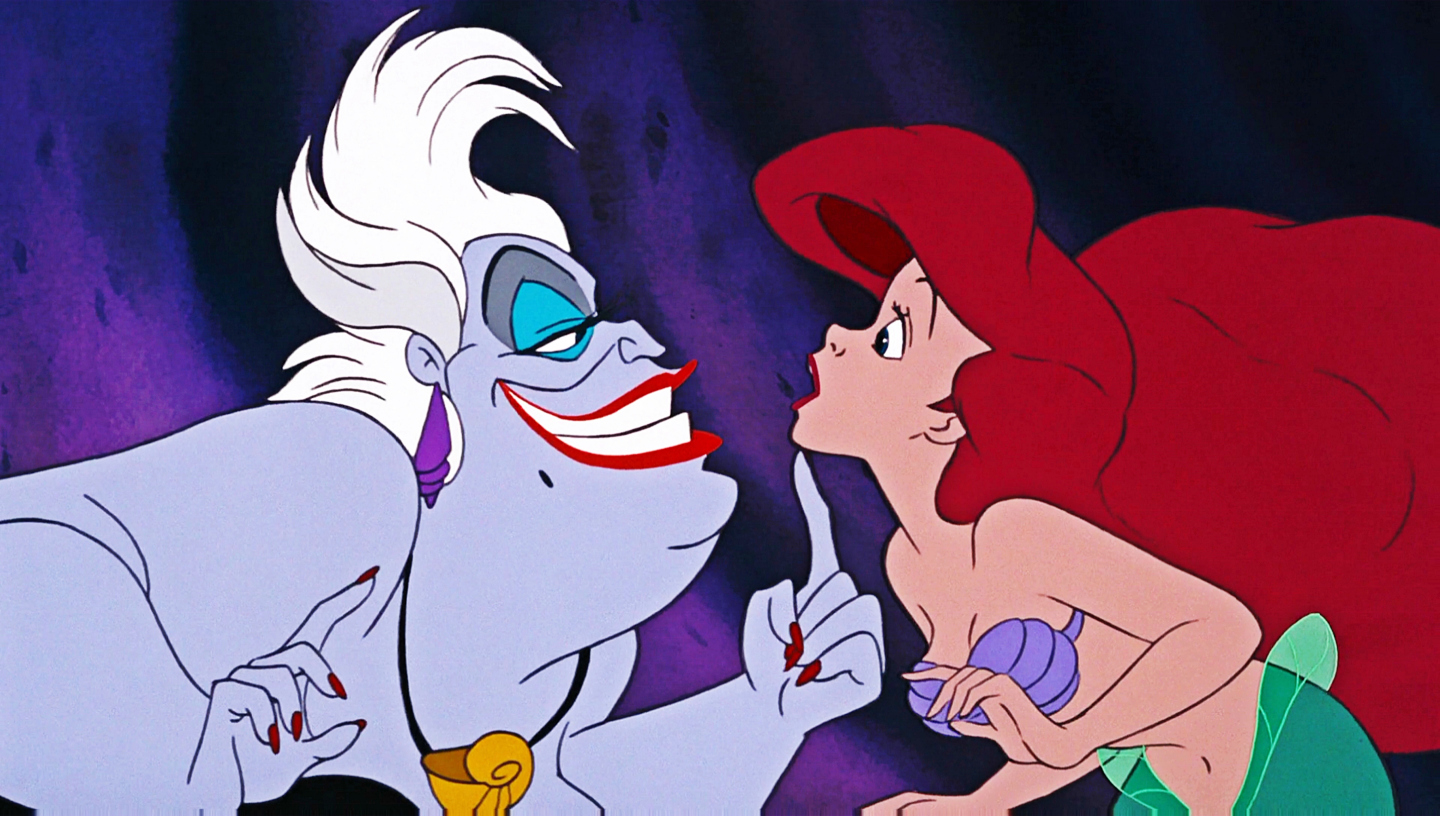
Sometimes, an antagonist has nothing to do with creating the problem, but they don’t want to see it solved, either. For instance, in The Little Mermaid, the main conflict is that the Ariel longs to enter a world that is out of her reach. She goes to a witch and asks for legs, and Ursula gives her what she wants. Ursula didn’t create Ariel’s longing and actually accommodates the protagonist so she can go on her quest. But by the end, Ursula does have goals that contradict the protagonist in order to accomplish her own selfish ends.

This series addressed the concept of protagonist first, but that doesn’t mean every story idea has to start with the hero. The most important thing about an antagonist is that they are the opposite of the protagonist. It can sometimes be easier to work from the conflict backwards and figure out who will resolve it.

In the past decade, there has been a rise in the number of nuanced antagonists in film and television, as well as attempts to soften classic villains through adding a sympathetic backstory (e.g. Maleficent, The Phantom Menace). For many, this felt like a total affront to their concepts of good and evil, and these films have gotten a lot of heat from fans of the originals. To borrow a term from author Leanna Renee Hieber, there are fewer “Shakespearean villains” nowadays, meaning the over-the-top, unequivocally evil ones. Over the course of a film or series, it is much easier to explore the different sides to every story. But in a five-minute skit, it’s going to be much harder to give them this sort of treatment.

When it comes to P.A.R.T.Y. in a Box antagonists, the easier it is to spot them (and so the conflict), the better. Our Triathletes have very little time and limited resources at their disposal to help the audience identify who to root for. In this case, the more Shakespearean, the better! Give your villain an evil laugh, purely selfish motive, and world-ending laser, and the judges will thank you. The easier it is for them to identify your characters and conflicts, the easier it will be for them to understand the message of the story. Remember, the theme section of the scoring guidelines has the potential for the most points in the event, and the characters are there first and foremost to explore that theme.

For Coaches and Teachers, For Parents, Multiple Intelligences, Resources

The Naturalist Intelligence

For the final installment in our Multiple Intelligences series, we’ll be looking at one of the types of intelligence that can be the hardest to recognize. In fact, Howard Gardner, who first put forth the theory of multiple intelligences in 1983, did not include Naturalist Intelligence in his original list of seven types of strengths. It took until 1994 for him to start discussing an eighth intelligence, and it appeared formally the first time in his 1999 book, Reframing Intelligence. (Source)

What Does Naturalist Intelligence Mean?

In the simplest terms, it means that a person exhibits “nature smarts.” This can take the form of always wanting to be outside, an affinity for getting dirty, or a natural curiosity about plants and animals. If you’ve ever had a student who could tell you the scientific name of of their favorite beetle, then you’ve had one of these little nature lovers in your life. They will be interested in the birds flocking South for the winter, and will happily report on how many new buds appear on your houseplants.

Those character traits are pretty easy to spot, but by extension, people possessing the Naturalist Intelligence are also aware of their environments in a different way than others. Bodily/Kinesthetic Intelligence can help a person mentally map their surroundings in terms of their own body, but is tailored to taking in a situation or environment as it stands. A naturalist will be in tune with how the environment is subject to changes. They are able to see patterns where others just see chance, and make connections between cause and effect that many don’t see.

This is achieved by having heightened sensory perception. These people literally see, smell, hear, touch, and taste more than the rest of us. They probably don’t even realize it is happening; the patterns their brains pick out are simply self-evident. The naturalist is likely baffled by how the average person can miss so much that is right in front of their faces.

In our fast-paced, tech-obsessed lives, it is painfully easy to overlook the value of Naturalist Intelligence. We spend so little of our time outside, interacting with the natural world, these tendencies could never have a chance to manifest. When you can ask a search engine how many petals a daisy has, there’s little incentive to actually get off the couch and look at a daisy.*

This means that as parents, coaches, and teachers, it has to be our job to take away that screen time sometimes and make our students go outside to see the forest and the trees. When a triathlete gets excited about the biology questions on Face-Off! Or begs to go to the zoo for your team-building field trip, it’s time to sit up and take notice. You’ve got a naturalist on your hands!

Want to find out more about the other facets of the Multiple Intelligence theory? Check out our posts on Verbal/Linguistic Intelligence, Math/Logic Intelligence, Visual/Spatial Intelligence, Bodily/Kinesthetic Intelligence, Musical Intelligence, and Intra/Inter Personal Intelligences.

*The answer is 21 petals.