For Coaches and Teachers, For Hosts and Facilitators, For Kids, For Parents

Round Robin #2 Reflection

usat_picks45

Two Meets down, my how the time flies! We’re already hard at work on RR3, so if you’ve got any comments or questions this is great time to share. Did you see a P.A.R.T.Y. skit that blew you away? Team work that won the day? Or were there challenges we could help you overcome?

Please, leave us a comment or e-mail Sarah@usacademictriathlon.com.

Elements of Storytelling, For Coaches and Teachers, For Kids

Elements of Storytelling: Themes

IMG_8679.JPG

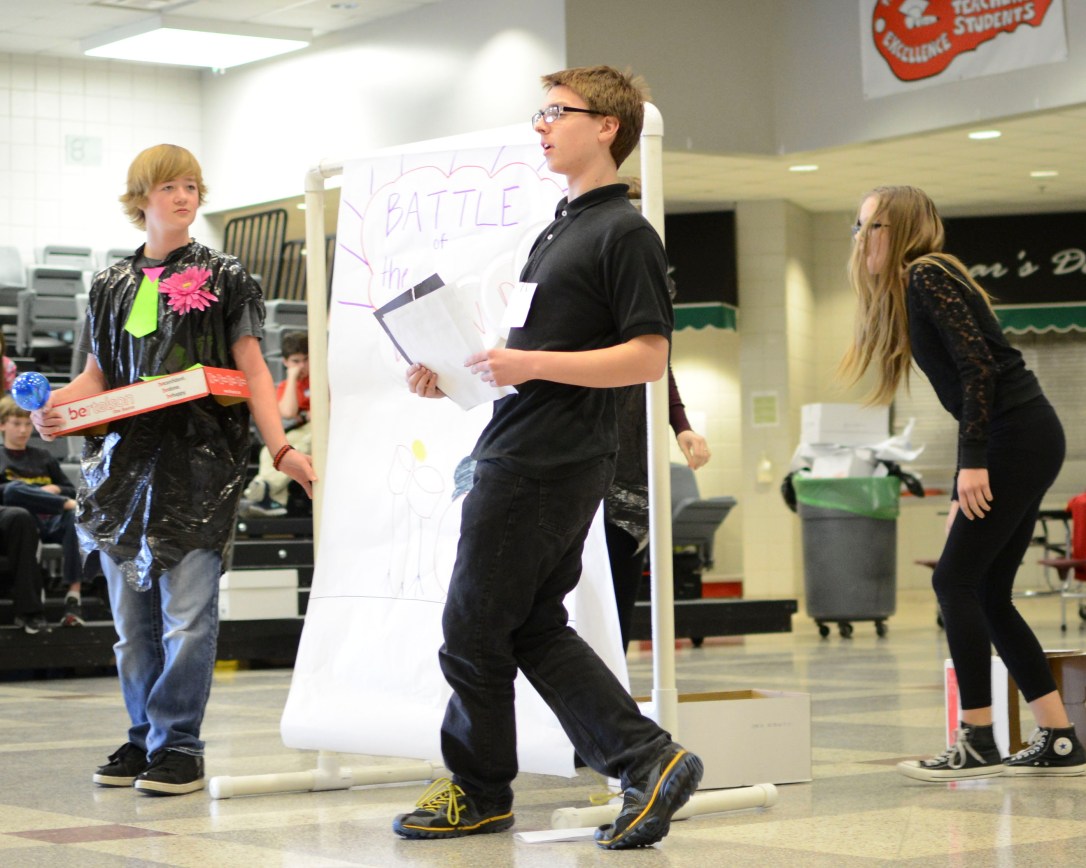
For many of our triathletes, not to mention their parents, the P.A.R.T.Y. in a Box skits are the highlight of every USAT Meet. Coming up with an idea, figuring out a story, making all of the props and costumes, and practicing the skit; these are all things that take time, and with only 45 minutes to answer the prompt every second counts! In other posts, we’ve addressed strategies for taking care of the props and costumes, but it’s time to take a few posts to discuss what makes a good story, and some tips for developing stories quickly. Every story needs certain elements to make it complete, and during the rest of this season we’ll be exploring each one.

Story Elements:

  1. Theme
  2. Protagonist (the hero)
  3. Antagonist (the villain)
  4. Beginning
  5. Middle
  6. End

It might seem strange not to begin with the beginning, but USAT teams start the process of figuring out their stories with another element already decided: the theme. We always shape our P.A.R.T.Y. prompts around themes and make it easy to find (hint: it’s always #3 on the scoring rubric!). We think themes are so important, in fact, that it is also the area where students have the most potential to score points.

Starting out with a theme is a huge advantage because it provides tension without dictating anything else about the story. There is nothing quite so daunting as a totally blank page, so by providing a theme for each P.A.R.T.Y. event we are giving our students a place to start. We also give the judges plenty of latitude when it comes to scoring in order to reward those teams who are able to do more to show different sides of their chosen story.

Humans love to tell stories, but despite how many different writers and stories there are, there are really only a handful of themes that emerge over and over again. The longer the story and the larger the cast of characters, the more themes the story could possibly explore. Old adages such as “be careful what you wish for” and “absolute power corrupts absolutely” get played out by different characters in different settings throughout our storied past.

In our culture that prides innovation, this might seem like a bad thing, but the truth is that we see these themes repeating because they are struggles that could affect anyone, and watching characters working through it in their own way offers us a chance to consider different options. If we didn’t take solace, wisdom, and pleasure from stories, we wouldn’t keep coming back for more, and using a theme as a pivot is one way to ensure the audience walks away with something of value when the story is finished.

 

Uncategorized

Round Robin #1 Reflection

Thank you to all host/facilitators for your patience as we dealt with technical difficulties regarding our online scoring system. Some host/facilitators have already reached out to Sarah Sheldon with any questions or issues regarding scoring. Please feel free to contact her with any concerns. She can be reached at sarah@usacademictriathlon.com. The online scoring page is already up and running, everything should be fine for Round Robin 2.

Besides our technical difficulties, how did the Meet go? We’d love to hear from parents and coaches about what they liked, what could have gone smoother, and any fun stories from our first Meet of the year.

Face-Off

In Case You Missed It: Face-Off Tips

There are strategies such as SCAMPER and a close reading of the scoring rubric that can help USAT participants in obvious ways during Mind Sprints and P.A.R.T.Y. in a Box events. It is more difficult to strategize when it comes to answering the trivia and logic problems in Face -Off!, but there is one approach your team may want to try.

There are five categories in the Face -Off! competition, and they are the same in the oral and written rounds. Here is the breakdown:

  1. Science/Health- principles and vocabulary of rudimentary astronomy, biology, chemistry, and physics, plus human health issues
  2. Math/Music Theory- logic and math problems spanning arithmetic, geometry, and algebra as well as principles and vocabulary in music
  3. Current Events/Consumer Issues- News of the day and information about new advancements in technology and other industries
  4. English Literature/Usage- Characters, major plot points, and information about authors as well as definitions of words and grammar in the English language
  5. Social Science/Geography- American history and government, world history, and geography

Five categories, and five members of a USAT team. Coincidence, or opportunity?

Different students have different strengths and challenges; things that come easily to one will be difficult for another. As a coach, you can help your students by talking about these different abilities and working together to appoint “experts” in the various Face -Off! categories. This will encourage them to take ownership of different content, such as by staying on top of the news of the day or reading new books. The expert could last for a whole season or rotate by Meet, depending on your strategy and goals. Team mates can use the expert’s knowledge as their jumping-off point or deciding vote during a dispute about an answer, which, in turn, saves time.

US Academic Triathlon is both a chance for students to play to their strengths as well as push themselves to excel in other areas that don’t come as easily. By rotating your experts, or assigning tasks to students that they find challenging, it is also an opportunity for them to grow. Perhaps one of your students has a problem with remembering the location of the 50 US states. Rote memorization rarely works, but you could add something else to the research, like three fun facts about each state or asking them to use the outline as the basis of a drawing. The student could then potentially present on her findings during practices and expand the knowledge of all of her team mates at the same time.