
The first Meet is just one week away, so it is time to think about getting the students prepared to compete. Whether or not you hold any practices before the season starts, it is important to make sure you competition kit is up to snuff. This may be the first time your competition is being used, or maybe your are dusting off the tried-and-true one from last year. Either way, there are certain things that are vital to every Meet.
Make sure that your competition kit is clearly labeled with your team’s school in case it gets misplaced. Kits should include only the following items, extra items will be discarded by facilitators.
1. Pencils- Kits may have up to 6 pencils, so make sure they are sharp and they have good erasers.
2. Markers or Bingo dabbers- Teams should have the following 8 colors available to them: red, blue, green, yellow, orange, purple, black and brown. Markers can dry out over time, so it is a good idea to test yours before each Meet. Kits may also contain up to 5 “day-glo” highlighter markers in addition to the regular markers or Bingo dabbers (these are slightly larger than markers and contain colored ink, which allows the artist to cover more area on a backdrop or piece of paper quickly, but harder to create fine detail).
3. Scratch paper- Each kit should contain a stack of scratch paper (fresh or recycled) up to 1/2 inch thick. Scratch paper is often used during Mind Sprints and Face-Off events.
4. Tape- Teams may have up to four rolls of tape in their kits, 2 clear “Scotch” tape style and 2 masking tape. The masking tape should be the standard buff color, not brightly colored painter’s tape.
5. Scissors- Kits should contain 2 pairs of regular paper scissors. Please, no fancy scissors that provide specially textured edges.
6. Dictionaries- Students are allowed to use up to two paperback dictionaries during each Meet. Some dictionaries contain extra information such as a table to help convert between different kinds of units, but these enriched dictionaries provide an unfair advantage and are not allowed.
7. Name tags- Team members must wear a name tag at all times during their Meet. Make sure you have name tags large enough to also include the team’s letter as assigned during registration (students receive stickers during registration). These can be single-use name tags that are discarded after every Meet, or more permanent ones such as those that pin on to clothing. Students are encouraged to decorate their name tags, but their name and Team number must be easily read by facilitators.
Items in the competition kit may be used throughout Face-Off and Mind Sprint events, and during P.A.R.T.Y. in a Box preparation, but they are not allowed during performances. For instance, students are not allowed to use materials from the kit as part of a prop that is used during the show. Tape may make an appearance in order to hang a back drop at the beginning of a performance before the timer starts timing, but it cannot be used to tie up a prisoner, etc during a performance.
And don’t forget, though it is not part of the competition kit each team is required to bring a lidded photo-copy paper box and any additional P.A.R.T.Y. items to the registration table before the Meet begins.
Team’s are encouraged to devise a team “uniform” to build solidarity, but this is not required. Clothing at Meets is limited to those things normally worn during the school day. As much fun as it might be to wear a cape or baseball hat, these items are not allowed during competition.
Good luck and have a great Meet!
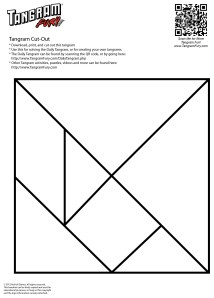 And now for Rearrange. During the USAT season, the writers often employ at least one Mind Sprint where spatial awareness is key. Objects and ideas are flipped over or reversed, or the sequence of events may need to be changed in order to solve a problem. We ask students to use shapes and tools to copy images or to create their own pictures. Some students find this fun and easy, but for others it can be a real challenge.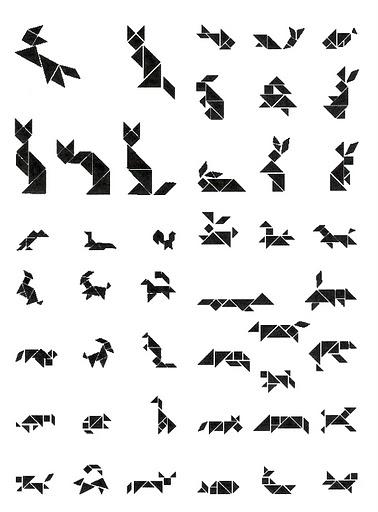
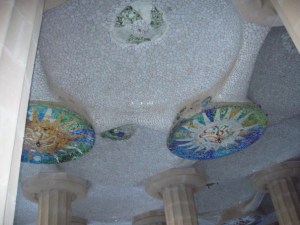 Lately, there has been a trend to take waste products and turn them into something new. For example, those nice tote bags that you can buy in grocery and convenience stores are often made out of recycled plastic bags. Antoni Gaudi was a Spanish artist who took broken plates and tiles and made them into beautiful artwork. In one of my favorite episodes of Mythbusters the team took old newspapers, soaked them in water and froze them in a boat-shaped mold. They were able to add and engine and motor around a lake for almost an hour!
 usacademictriathlon.com