Elements of Storytelling, For Coaches and Teachers, For Kids

Elements of Storytelling: Themes

IMG_8679.JPG

For many of our triathletes, not to mention their parents, the P.A.R.T.Y. in a Box skits are the highlight of every USAT Meet. Coming up with an idea, figuring out a story, making all of the props and costumes, and practicing the skit; these are all things that take time, and with only 45 minutes to answer the prompt every second counts! In other posts, we’ve addressed strategies for taking care of the props and costumes, but it’s time to take a few posts to discuss what makes a good story, and some tips for developing stories quickly. Every story needs certain elements to make it complete, and during the rest of this season we’ll be exploring each one.

Story Elements:

  1. Theme
  2. Protagonist (the hero)
  3. Antagonist (the villain)
  4. Beginning
  5. Middle
  6. End

It might seem strange not to begin with the beginning, but USAT teams start the process of figuring out their stories with another element already decided: the theme. We always shape our P.A.R.T.Y. prompts around themes and make it easy to find (hint: it’s always #3 on the scoring rubric!). We think themes are so important, in fact, that it is also the area where students have the most potential to score points.

Starting out with a theme is a huge advantage because it provides tension without dictating anything else about the story. There is nothing quite so daunting as a totally blank page, so by providing a theme for each P.A.R.T.Y. event we are giving our students a place to start. We also give the judges plenty of latitude when it comes to scoring in order to reward those teams who are able to do more to show different sides of their chosen story.

Humans love to tell stories, but despite how many different writers and stories there are, there are really only a handful of themes that emerge over and over again. The longer the story and the larger the cast of characters, the more themes the story could possibly explore. Old adages such as “be careful what you wish for” and “absolute power corrupts absolutely” get played out by different characters in different settings throughout our storied past.

In our culture that prides innovation, this might seem like a bad thing, but the truth is that we see these themes repeating because they are struggles that could affect anyone, and watching characters working through it in their own way offers us a chance to consider different options. If we didn’t take solace, wisdom, and pleasure from stories, we wouldn’t keep coming back for more, and using a theme as a pivot is one way to ensure the audience walks away with something of value when the story is finished.


For Coaches and Teachers, For Hosts and Facilitators, For Parents

It Takes a Village…

Yes, US Academic Triathlon is a program for middle-school students, but it wouldn’t be possible without dedicated teachers and parents who volunteer their time so their students can learn and grow.

There are a few ways to manage a USAT program at your school – if you plan to have more than one team, a Head Coach/Program Coordinator is recommended. Most importantly, this person manages registration and liaises with the national office, while ensuring the school’s program is run with fair play, civility, and good sportsmanship. The head coach can then recruit additional coaches to help with team practices and help staff Meets (each team is required to provide two experienced coaches/parents for each Meet to help the competition run smoothly).

Who makes a good USAT coach or volunteer? Anyone 16 or older (yes, high school students can help coach teams – and often former USAT competitors make the best volunteers!) who is dedicated to helping students gain leadership, creativity, and out-of-the-box thinking skills.

While specific details regarding coach duties can be found in the Program Manual and our Coaching a Team page, there a few MUST’s USAT requires of its coaches:

  1. Coaches must set high standards of sportsmanship and fairness during and surrounding competitions. Students look to you as examples – show them what it means to be a leader and a good teammate.
  2. Coaches must reward good ideas and positive attitudes as they see them displayed by students of all participating schools (speaking specifically when at Meets). USAT isn’t ultimately about being “the best,” but growing as an individual. Encourage and reward any student when you see them exemplifying this ideal.

Parents, guardians, teachers, older siblings, high school volunteers, college students, and grandparents – anyone willing to give their time to the growth and education of a student can be a USAT volunteer coach. Our students – and our staff – appreciate your time and efforts!

For Coaches and Teachers, For Parents

Strengths and Benefits of US Academic Triathlon

Convincing district or school officials to add another extracurricular activity – and another budget line item – can be difficult. However, US Academic Triathlon takes a different approach to academic extracurriculars, working to prepare students in grades 5 through 8 to be successful in their next stage of education and the rest of their lives. Five-student teams must display good sportsmanship and teamwork while exhibiting the outcomes of their creativity and positive risk-taking.

img_8673USAT is a creative thinking skills program that employs a competition to teach and reward creative, divergent thought processes, cooperative brainstorming, general intellect, leadership, and a flare for the dramatic – all while providing an entertaining, user-friendly format for both students and adults.
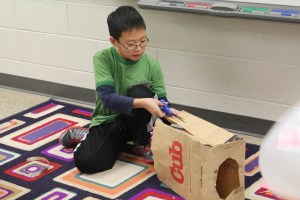
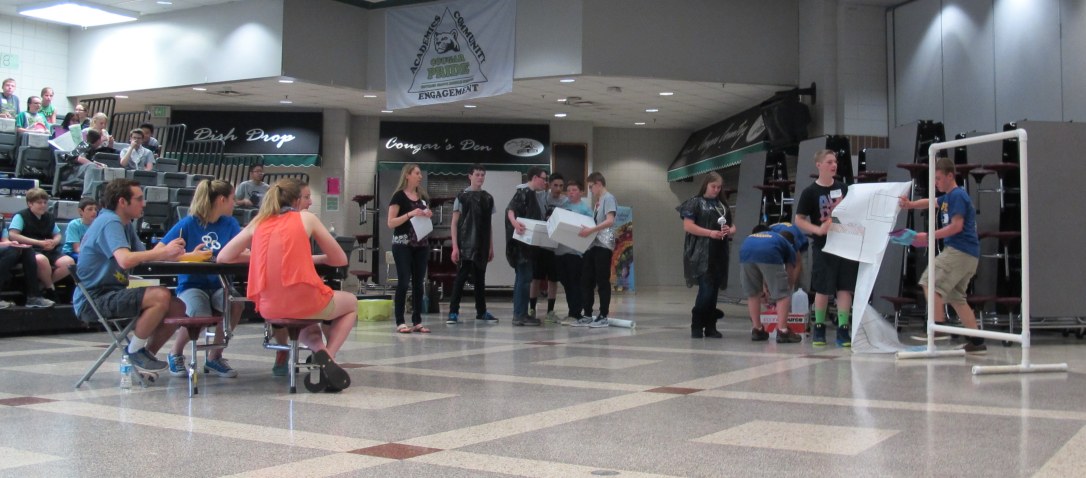
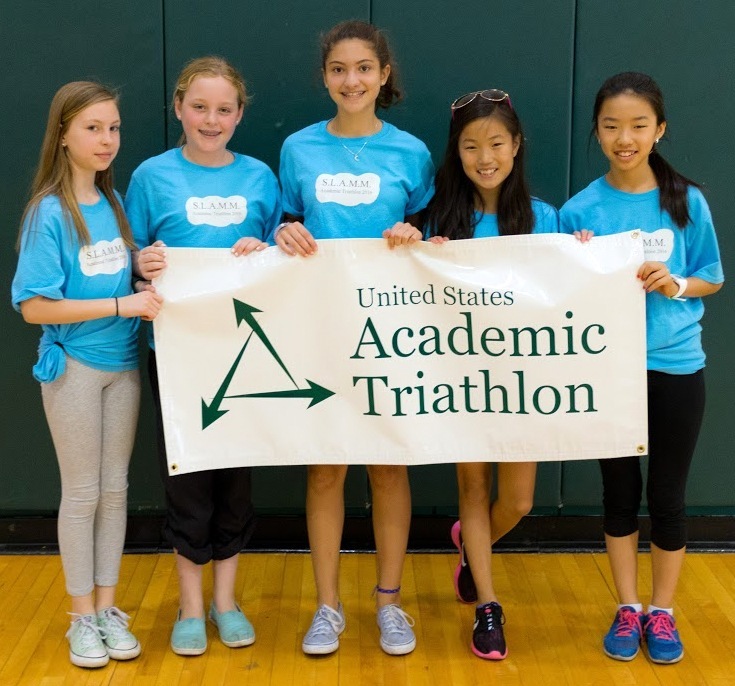
Anyone who has enthusiasm for building things, writing plays, solving puzzles, answering trivia questions, or thinking on their feet will love USAT. The program offers a wide range of problem-solving situations across several disciplines in order to find something to interest and stimulate every learner.

Students of all ability levels are welcome, and the program is designed to promote contributions by every team member, making the strongest teams the ones with members who have a wide range of strengths and knowledge. One student may be great at drawing backdrops while someone else is good at complex math problems, and they all can find a home in US Academic Triathlon.

IMG_0746
Anything can be a costume with a pair of scissors and some imagination!

The season includes three Round Robin Meets, a Regional Meet, and the opportunity to compete at the State Meet. Each Meet is comprised of an oral and a written round of Face-Off!, three Mind Sprints, and a P.A.R.T.Y. in a Box presentation. During Face-Off!, students are challenged to recall age-appropriate facts and knowledge in the categories of math and music theory, English usage and literature, science, social studies, and current events or “Kidsumerism.” Mind Sprint puzzles challenge and yield quick, creative solutions that require divergent thinking skills, visual problem-solving, logic, construction, and team cooperation.

img_8678

In Preparation And Re-enactment Theater is Yours (P.A.R.T.Y.) – In a Box!, teams receive a problem in the form of a theatrical scenario, and equipment to create props, costumes, and a backdrop with which to demonstrate their solution. Students practice good sportsmanship and theater etiquette while watching others, and learn performance and public speaking during their own skits. USAT gives students a chance to practice their presentation skills in a safe environment that is less high-pressure than a class presentation or an audition.

The real product of USAT competition is personal growth. Students learn to think outside the box, to find ways to apply creative solutions to real world problems, and have educational experiences that last a lifetime. These “triathletes” have to take positive risks and approach each new problem with creativity and a sense of humor. This is done within a supportive environment, so any stumbling block can turn into a success and a chance to build confidence in their academic and problem-solving abilities. Students learn so much by stretching themselves and by taking a chance but USAT also builds “safety nets” into events so even if one member of the team is stuck, they can ask their teammates for help or find a creative way to tackle each Meet challenge. And because USAT is a competition, students also learn that sometimes they aren’t going to come in first place; but only through these kinds of experiences can children become poised and balanced adults.C023 - Valley ViewThe final, lasting experience of USAT is to overcome not the people, but the problems. Teams grow to realize that:

1.Each idea is only one of many that occurs to the human mind;

2. Each student brings to the team individual strengths that can be built upon;

3. Flexibility opens doors to new possibilities;

4. Positive risk-taking in an atmosphere of acceptance yields experiential learning and great memories; and

5. Students are able to handle the curves that life throws them – especially if they approach each problem with a sense of humor and a sense of their own self-worth.

The pursuit of new and creative solutions can result in failure, but this does not negate the journey. Oftentimes these “failures” turn out to be successes – they are simply the answer to a different question. This type of experience encourages students to think constructively and creatively, and reinforces a sense that their ideas matter. As students process out of their USAT season, they will become aware that AT really stands for “Able Thinkers.”


Announcements, For Coaches and Teachers, For Hosts and Facilitators

State 2016 Information

Thank you to all 2015-16 teams for a great regular season! You worked hard through three Round Robins and Regionals and you should be commended.

Congratulations to all teams who qualified for the State Meet! We look forward to seeing you on April 16! Here are a few important details to get ready for State.

U.S. Academic Triathlon State Tournament is April 16, 2016 at Cottage Grove Middle School, 9775 Indian Blvd S, Cottage Grove, MN 55016. State Host/Facilitators (to be chosen by USAT) will meet at 10 a.m., and all coaches will meet at 10:45 a.m. During this time, students will have team picture taken. The State Meet will officially begin with teams registering at 11:45 a.m. then go off to compete. P.A.R.T.Y. in a Box presentations will begin around 2:45 p.m., and the awards ceremony will take place around 4:30 p.m. to wrap up the day around 5 p.m. (all times after registration are approximate and subject to change).

Deadline to register for the State Tournament is April 1, 2016. [NOTE: If we haven’t heard from you by 11:59 p.m. on April 1, you will forfeit your place and we will open it up to the second place team at Regionals. Don’t delay!] A $50 tournament registration fee is due April 8, 2016. Check the website after April 6, 2016 for Tournament Information.

Submit your registration form (which was given to you at your Regional Meet) by scanning and emailing it to Executive Director Sarah Sheldon at sarah@usacademictriathlon.com then mail it with the registration fee to U.S. Academic Triathlon, 2355 Fairview Ave N #335, Roseville, MN 55113. If you have misplaced your form, contact Sarah Sheldon for a copy.

Each team must bring two Volunteer Facilitators, at least 16 years of age or older. Volunteer Facilitators must have a working knowledge of USAT and its Program Manual (which can be found at usacademictriathlon.com) and have helped at a Meet previously. Volunteer Facilitators will work in either of the State Meets in which their team is not competing. They will, however, be finished in time to see their team’s P.A.R.T.Y. in a Box presentation and not have to judge any of the skits.

You will find complete information about the State Tournament at http://www.usacademictriathlon.com after April 6. If you have registration questions, please contact Sarah Sheldon at 507-645-2560 or sarah@usacademictriathlon.com.

Congrats and good luck!

– the US Academic Triathlon team