
Elements of Storytelling, For Coaches and Teachers, For Kids, P.A.R.T.Y. in a Box, Resources

Elements of Storytelling: The Beginning

Welcome back for another installment of our series about how to craft a compelling story and get the right message across. (If you haven’t read our first P.A.R.T.Y. in a Box series full of tips for getting noticed, getting higher scores, and crafting awesome costumes and props, make sure to check that one out, too!)

So far in Elements of Storytelling, we’ve addressed the importance of themes, protagonists, and antagonists. Now, it’s time to take a look at how to structure a story and use the five minutes allotted to the skit to the best advantage. With so little time both to plan and to perform, it’s important to choose the right starting point.

Contrary to what Maria has to say on the matter, good stories should start as close to the central conflict as possible. If your protagonist is the painter Michelangelo, it really isn’t that important to see how he learned to walk or the first time he tried spaghetti. Almost everybody walks, so that sort of detail won’t do much good to help establish who he is or what the story is going to be about. If there are 30 seconds at the beginning that don’t directly relate to the theme or plot, then that is 30 seconds wasted.

Set the Scene

On the other hand, if the audience sees someone laying on their back and pretending to paint, that already starts a chain reaction in their brains to figure out who they are seeing. If they have ever heard about the Sistine Chapel ceiling he painted, the audience might be able to guess without any further prompting from a narrator or from dialogue. But just to be safe, it’s a good idea to drop in the name of your protagonist within the first 10 seconds of the play.

Movies and books sometimes include a prologue before a story begins in order to give the audience backstory (eg Lord of the Rings, Stardust), but for USAT this isn’t going to be the best approach. The opening image and establishing the protagonist’s “outsider” status tells the people watching (most importantly, the judges) who they need to be paying attention to from the beginning.
The beginning of a P.A.R.T.Y. skit is also a great time to let the backdrops, props, and costumes do a lot of the heavy lifting for you. If the background shows a forest, the audience already has a lot of information to go on. If there are people sitting in a circle on the ground in front of those trees pretending to cook, the audience can make a reasonable guess they are probably looking at a camping trip. Add a sash with scout badges, and we know even more.

These sorts of visual cues are very important and establish your opening image. The protagonist should be present, and will either be in a state of perfection (SOP) or state of imperfection (SOI). In an SOP, they should be happy and comfortable with the world, and no matter what happens in the story, the goal will be to return them to their SOP. This state can’t last very long, and losing it should be directly tied to the conflict and theme. If a story begins with a SOI, then the ending should be working toward a reversal of fortune or attitude at the end.

How do These Terms Apply?

Let’s continue with our camping scenario. A group of Wilderness Scouts is sitting around the fire. One of the scouts is having an awesome time, and the rest are complaining about the bugs, the smoke, and the cold. The protagonist must be the happy camper in their SOP, because remember, protagonists are the oddballs and outsiders.

Then, something happens (called the inciting incident) that forces the protagonist out of their SOP and into the story. Perhaps it’s a flash flood, alien invasion, or rift in time, but something must occur to send the protagonist on an adventure. If you wanted to start with the same scenario but using a SOI instead, the protagonist is the only person who isn’t having a good time before the inciting incident occurs.

After the inciting incident, which should happen no later than one minute into the skit, the story really takes off. Stay tuned for our next Elements of Storytelling post to find out how to get the most out of the middle.
Elements of Storytelling, For Coaches and Teachers, For Kids, P.A.R.T.Y. in a Box, Resources

Elements of Storytelling: The Antagonist

So far in this series, we’ve covered themes and protagonists. This post is to help our Triathletes get a little insight into crafting the perfect villain for their P.A.R.T.Y. in a Box skits to help the first two items really shine.

In short, an antagonist is the “bad guy” in a story. This person, group, or organization has goals that are directly at odds with the goals of the protagonist. They more than likely create the problem that the protagonist faces because they exhibit negative traits such as greed and selfishness. This could be a shady government, a mad scientist, or the “popular” kids at school.

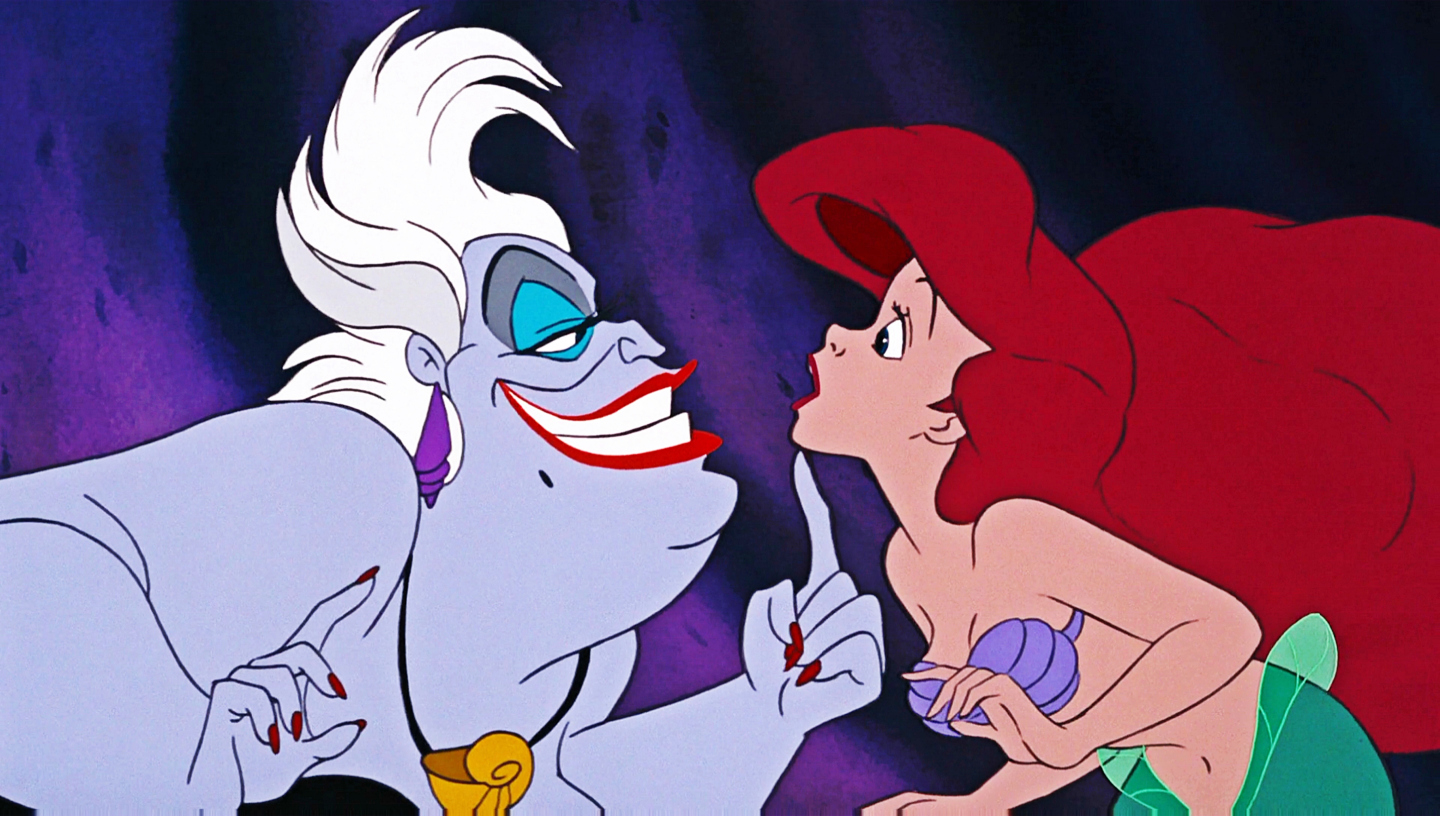
Sometimes, an antagonist has nothing to do with creating the problem, but they don’t want to see it solved, either. For instance, in The Little Mermaid, the main conflict is that the Ariel longs to enter a world that is out of her reach. She goes to a witch and asks for legs, and Ursula gives her what she wants. Ursula didn’t create Ariel’s longing and actually accommodates the protagonist so she can go on her quest. But by the end, Ursula does have goals that contradict the protagonist in order to accomplish her own selfish ends.

This series addressed the concept of protagonist first, but that doesn’t mean every story idea has to start with the hero. The most important thing about an antagonist is that they are the opposite of the protagonist. It can sometimes be easier to work from the conflict backwards and figure out who will resolve it.

In the past decade, there has been a rise in the number of nuanced antagonists in film and television, as well as attempts to soften classic villains through adding a sympathetic backstory (e.g. Maleficent, The Phantom Menace). For many, this felt like a total affront to their concepts of good and evil, and these films have gotten a lot of heat from fans of the originals. To borrow a term from author Leanna Renee Hieber, there are fewer “Shakespearean villains” nowadays, meaning the over-the-top, unequivocally evil ones. Over the course of a film or series, it is much easier to explore the different sides to every story. But in a five-minute skit, it’s going to be much harder to give them this sort of treatment.

When it comes to P.A.R.T.Y. in a Box antagonists, the easier it is to spot them (and so the conflict), the better. Our Triathletes have very little time and limited resources at their disposal to help the audience identify who to root for. In this case, the more Shakespearean, the better! Give your villain an evil laugh, purely selfish motive, and world-ending laser, and the judges will thank you. The easier it is for them to identify your characters and conflicts, the easier it will be for them to understand the message of the story. Remember, the theme section of the scoring guidelines has the potential for the most points in the event, and the characters are there first and foremost to explore that theme.

For Coaches and Teachers, For Parents, Multiple Intelligences, Resources

The Naturalist Intelligence

For the final installment in our Multiple Intelligences series, we’ll be looking at one of the types of intelligence that can be the hardest to recognize. In fact, Howard Gardner, who first put forth the theory of multiple intelligences in 1983, did not include Naturalist Intelligence in his original list of seven types of strengths. It took until 1994 for him to start discussing an eighth intelligence, and it appeared formally the first time in his 1999 book, Reframing Intelligence. (Source)

What Does Naturalist Intelligence Mean?

In the simplest terms, it means that a person exhibits “nature smarts.” This can take the form of always wanting to be outside, an affinity for getting dirty, or a natural curiosity about plants and animals. If you’ve ever had a student who could tell you the scientific name of of their favorite beetle, then you’ve had one of these little nature lovers in your life. They will be interested in the birds flocking South for the winter, and will happily report on how many new buds appear on your houseplants.

Those character traits are pretty easy to spot, but by extension, people possessing the Naturalist Intelligence are also aware of their environments in a different way than others. Bodily/Kinesthetic Intelligence can help a person mentally map their surroundings in terms of their own body, but is tailored to taking in a situation or environment as it stands. A naturalist will be in tune with how the environment is subject to changes. They are able to see patterns where others just see chance, and make connections between cause and effect that many don’t see.

This is achieved by having heightened sensory perception. These people literally see, smell, hear, touch, and taste more than the rest of us. They probably don’t even realize it is happening; the patterns their brains pick out are simply self-evident. The naturalist is likely baffled by how the average person can miss so much that is right in front of their faces.

In our fast-paced, tech-obsessed lives, it is painfully easy to overlook the value of Naturalist Intelligence. We spend so little of our time outside, interacting with the natural world, these tendencies could never have a chance to manifest. When you can ask a search engine how many petals a daisy has, there’s little incentive to actually get off the couch and look at a daisy.*

This means that as parents, coaches, and teachers, it has to be our job to take away that screen time sometimes and make our students go outside to see the forest and the trees. When a triathlete gets excited about the biology questions on Face-Off! Or begs to go to the zoo for your team-building field trip, it’s time to sit up and take notice. You’ve got a naturalist on your hands!

Want to find out more about the other facets of the Multiple Intelligence theory? Check out our posts on Verbal/Linguistic Intelligence, Math/Logic Intelligence, Visual/Spatial Intelligence, Bodily/Kinesthetic Intelligence, Musical Intelligence, and Intra/Inter Personal Intelligences.

*The answer is 21 petals.

For Coaches and Teachers, For Kids, For Parents, SCAMPER Technique

A Review of the SCAMPER Technique

SCAMPER is a valuable technique for students as they approach USAT challenges. Mind Sprints often are centered on brain-storming activities, or at least have a bonus round that requires quick thinking and fast answers. SCAMPER is a great way to come up with new uses for old ideas and objects. Teams are encouraged to keep a SCAMPER sheet int their Competition Kit all year long to help them out. Download a SCAMPER sheet now.

You can also visit our series on each of the 7 aspects of SCAMPER for more hints and explanations.

S is for Substitute

C is for Combine

A is for Adapt

M is for Magnify/Minify

P is for Put to Another Use

E is for Eliminate

R is for Rearrange

Enrichment Activities, For Coaches and Teachers, For Kids

Help Your Students Get to Know One Another with Interviews!

We hope you all had a great time at Round Robin #1! Many teams came back for yet another season, but we also had the chance to welcome new teams to the fold. In a perfect world, the students came together and sparked immediately in a shower of creative fireworks. In reality, even the most seasoned Triathletes can use a little nudge back into sync from time to time.

Since it’s the beginning of the season, we thought we’d provide a “getting to know you” activity for the students. It’s a dash of P.A.RT.Y. in a Box and mixed with a Mind Sprint’s ticking clock. We’d love to see the results of this role-playing activity. Please, send any finished interviews, images the activity inspires, and videos of our students giving it a whirl to Alison@usacademictriathlon.com.

Objective: Use an interview structure to refresh acting skills and help the students get to know each other better to boost creative flow.

Quick Set-up: An activity for 1 or more. Download and print the interview questions template, or answer the questions below as a verbal activity.

Conducting the interviews: We ask our Triathletes to introduce themselves at Round Robin #1 every year. Now, it’s time to think about who you’d like to be rather than who you are. Use the questions to create a fascinating life story for yourself. The sky is the limit when it comes to what can happen between now and 2050, so aim high when you talk about your accomplishments and aspirations as your adult self.

Take turns acting as an interviewer, be it for a local newspaper, Time Magazine, or your future child’s family history project. Feel free to add or skip any questions you don’t feel like doing. Some people may wish for time to write down their responses in advance, and others may feel ready to jump right in. Use these questions in whatever way works best for you!

Bonus activity: Use your Competition Kit or things around the home or classroom to create one prop your future self would use to add interest to their interview. Refer to it at any point during the dialog and tell a story.

Interviewer: Briefly introduce yourself for the “audience,” then proceed to the questions.

Interview Questions

  1. What an interesting life you’ve lived! Are there any moments that stand out to you the most?
  1. You are a person of many talents. What would you say you are the best known for at this point in your life?
  1. Did that take any training or classes to be able to do that? Maybe a mentor or someone who made a real difference?
  1. When you aren’t busy with that, how do you spend your free time?
  1. Do you do all of that by yourself, or do you have friends or family who do that with you?
  1. What about pets? Do you have a furry friend or slippery serpent in your life? Does your pet require any special care?
  1. Do you have a favorite book or quote that inspired you along the way?
  1. What’s in store for you next? Do you have any goals for the second half of the century?
  1. Thank you so much for your time. Do you have any parting words or advice for young people today?