For Coaches and Teachers, Resources, SCAMPER Technique

Getting the Most out of SCAMPER: P is for Put to Another Use

So far, most of the SCAMPER technique has been about how to change ideas and things, but P is all about recognizing the qualities that are already inherent in an object or attitude.

For instance, dice are used to tell you how far to advance during a board game but they could be used to practice math problems. Playing cards are used in lots of games to take tricks, but a group could decide that the person who draws the low card has to go out to get more snacks. Butter is delicious on toast, but as seen at the MN State Fair it can be a great material for sculpting. Toothpicks can get spinach out of your bicuspids, but they are also used to make appetizers easier to eat. Styrofoam is a packing material, but it also floats so if a person needs an emergency life preserver it would do in pinch to save your life.
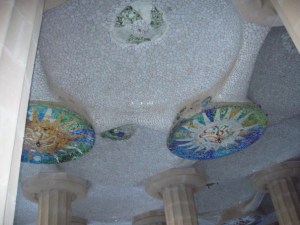
Parque Guell ceilingLately, there has been a trend to take waste products and turn them into something new. For example, those nice tote bags that you can buy in grocery and convenience stores are often made out of recycled plastic bags. Antoni Gaudi was a Spanish artist who took broken plates and tiles and made them into beautiful artwork. In one of my favorite episodes of Mythbusters the team took old newspapers, soaked them in water and froze them in a boat-shaped mold. They were able to add and engine and motor around a lake for almost an hour!

So if you are having a practice session before a Meet, think about bringing different objects and giving the students a chance to think about all the different things they could be used for.

Happy brainstorming!

For Coaches and Teachers, Mind Sprints, Resources, SCAMPER Technique

Getting the Most out of SCAMPER: M is for Magnify/Minify

Here we are the the midpoint of our SCAMPER acronym, but if you missed the background, S (Substitute), C (combine) or A (adapt) the posts are all waiting for you. So onwards and upwards, or as the case would be, bigwards and smallwards.

The M of SCAMPER stands for “Magnify,” or making things bigger. In a pinch, this is a great fallback when stuck during a brainstorming session or thinking about ways to change an object to put it to a new use. For instance, if you make a house key much larger, it can be used not only to open a comically large lock, but the big, sharp teeth would make it a great saw. Or a crouton could be an ideal raft in a giant bowl of soup. With a big enough tube of lipstick a person could paint a whole building, though I would avoid brush up against that exterior, the stains would be a nightmare!

On the other hand, the opposite side of magnify is “minify”, ie making things smaller. If a person were the size of Pekinese then they could live comfortably in a kennel, or if they were even smaller a whole town could move into your ventilation system. If pizzas are bite-sized you would be able to sample many different varieties without all those calories. There are lots of things that would be convenient to carry in your pocket if they were only a few inches tall, and think of all the cool stuff that could be worn as jewelry!

Another thing that can be made bigger or smaller is an idea. Taking “selfies” became a huge craze, but what about the next big thing for internet? Electric cars exist, but could there be consequences if everyone in the world had one? And right now in scientific circles people have re-opened the debate about whether or not Pluto is a planet. They have to decide if they are going to expand or limit the definition of what constitutes a planet, and there will be consequences of that decision.

So if you are looking for something to do during a USAT practice, you could try having your students practice making things bigger and smaller in their minds, and think of new uses for them once they’ve been changed.

For Coaches and Teachers, For Kids, For Parents, Resources, SCAMPER Technique

Getting the Most Out of SCAMPER: Background on the Technique

If you are a new USAT coach you have probably never heard of SCAMPER before, but even veteran coaches can benefit from a refresher and new ideas about how to use this fun brainstorming technique to help your students reach new creative heights and do their best at every Meet. It is a great way for students to stretch their imaginations, and a good fallback option if they are feeling stuck during a challenge.

SCAMPER is an acronym for a collection of ways something can be modified in order to create something new. An educator named Bob Eberle consolidated the ideas of Alex Osborn into the easy-to-remember acronym decades ago. Over time and depending on the version you use, some of the letters have come to represent more than one way to change something, so it is sometimes written as SCAMMPERR. There is no right or wrong way to use this tool as long as it helps people generate new ideas! USAT provides one version of this technique as a handout in the manual, but you can also download a PDF of the S-C-A-M-P-E-R Sheet here.

Over the next several weeks, USAT will be providing in-depth posts on each individual method to help students, parents and coaches get the most out of this great tool. If you would like to receive these updates via e-mail, please use the button on the sidebar to follow this blog. These posts, as well as other weekly brainstorming prompts, will be available on the USAT facebook page for the duration of the season, so you can also “Like” us on Facebook to follow along.

Here are the words that go with each letter:

S is for “Substitute”

C is for “Combine”

A is for “Adapt”

M is for “Magnify/Minify” or “Modify”

P is for “Put to a New Use”

E is for “Eliminate”

R is for “Reverse” or “Rearrange”