
When employing “eliminate” in your brainstorms, one way to think about it is that you are reducing something to its most essential elements. If you take the sound system out of a car, is it still a car? Of course it is. But what about the engine? Your first reaction may be to think that the engine is essential, but I would make an argument that it is really its shape that makes a car a car. Think about cars from The Flintstones, or that kids pedal around their yards before they can ride a bike. These do not have engines, but what other label would you give them other than car? This exercise of stripping something down in order to define it is a great way to get kids to think about the world around them and come to recognize how things may be similar or different in various ways.
It can also help them to create their P.A.R.T.Y. in a Box performances, by helping them get to the heart of what backdrops, costumes and props need in order represent something more complex. If they want to show a park, can they get by with just drawing a swing set? If they are going to make the audience believe they are carrying something heavy they don’t actually need a great weight, only a sac that looks full (and some good acting skills!).
The most straightforward way to use “eliminate” to get your students to stretch their brains is to start with something intact, and have them take turns eliminating elements and considering the consequences. This could be done systematically by first thinking of all the parts of a thing and then taking each out one by one. The more complex machine, organism or situation you begin with, the more opportunity there is to get rid of different elements, but you can always start simple and move to the more complex.
As I was writing this article I thought of a few prompts you could use with your students that all involve elimination. For instance, if you begin with an airplane and eliminate all the seats, would that lead to a more comfortable flight? Could they find a way to play with their electronic toys if the batteries are taken out? If someone loses their voice in the middle of an argument, what might happen? Or if a certain character was removed from a story, would it still have the same outcome?
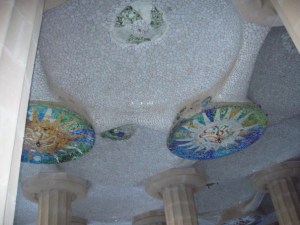 Lately, there has been a trend to take waste products and turn them into something new. For example, those nice tote bags that you can buy in grocery and convenience stores are often made out of recycled plastic bags. Antoni Gaudi was a Spanish artist who took broken plates and tiles and made them into beautiful artwork. In one of my favorite episodes of Mythbusters the team took old newspapers, soaked them in water and froze them in a boat-shaped mold. They were able to add and engine and motor around a lake for almost an hour!
 usacademictriathlon.com