Multiple Intelligences, Resources

The Verbal/Linguistic Intelligence

In this first installment of our Multiple Intelligences series, we decided it would be a good idea to differentiate between “Intelligences” and “learning styles.” There is definitely some overlap between a few of the styles and the various intelligences, but they are not the same thing at their heart. In brief, a learning style refers to the way a person prefers (or is more naturally inclined) to receive and process new information. Intelligences deal more with a person’s inherent interests and abilities.

Both the verbal learning style and the Linguistic/Verbal Intelligence deal with words, but in a different way. For instance, if a person has a verbal learning style, they will prefer to take in new information (on any topic) through words. This may be in the form of reading or listening to a lecture. On the other hand, a person who exhibits the Linguistic/Verbal Intelligence (word smarts) may have a verbal learning style, or they may not. And a person with a verbal learning style may be very interested in listening to a lecture about science and take in all of the information, but could be bored and distracted in English class regardless of the way the teacher is teaching the subject.
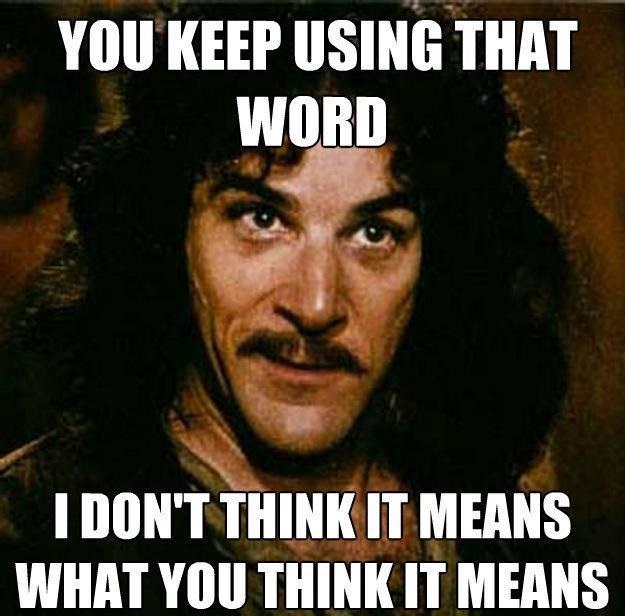
Funny-Meme1What defines the Linguistic/Verbal Intelligence is the internalizing of grammar rules, remembering new words they learn, and enjoying puns and word games. These people will often excel at foreign languages because of their innate ability to recognize grammar rules and remember them. They read for pleasure and easily remember quotes. In essence, they enjoy language for language’s sake rather than it just being a tool for taking in new information. Here are a few more examples:

  • They enjoy rhymes, alliteration, and puns.
  • They will talk about things they have read and be able to verbalize why they liked or disliked them.
  • They most likely write poems and stories, because reading them isn’t enough.
  • They correct other people’s grammar and word usage.
  • They know definitions of words that others will not, and use those “fancy” words in conversation.

In our USAT Meets, we try to appeal to students who have this inclination by asking them specific grammar and vocabulary questions, as well as quizzing them on new and classic literature during Face-Off! In the past, we have also had Mind Sprints where a person who exhibits Linguistic/Verbal Intelligence can shine, such as “Connectors” in the second Round Robin. In this challenge, teams were given dominoes with word parts on them, and they had to recognize combinations of three dominoes that made two complete words.

Next week we’ll take a look at the second of the eight Multiple Intelligences, Logical/Mathematical Intelligence.

Multiple Intelligences, Resources

Introduction to Multiple Intelligences

MIMainPage

At its most basic, the Theory of Multiple Intelligences tells us there is more than one type of ‘smart.’ No, we aren’t talking ‘street smarts’ vs. ‘book smarts,’ it goes so much broader than that.

This way of thinking about education was put forward by a pedagogical specialist named Howard Gardner in 1983. There has been some revision and debate over the years, and the number of different intelligences can range from seven to nine, depending on who you read. Between now and the end of this USAT season, we will use the time to explore the different sorts of intelligences, how we address them in our program, and ways to engage these different types of learners.

Gardner’s original theory identified eight different intelligences:

  • Linguistic intelligence (“word smart”)
  • Logical-mathematical intelligence (“number/reasoning smart”)
  • Spatial intelligence (“picture smart”)
  • Bodily-Kinesthetic intelligence (“body smart”)
  • Musical intelligence (“music smart”)
  • Interpersonal intelligence (“people smart”)
  • Intrapersonal intelligence (“self smart”)
  • Naturalist intelligence (“nature smart”)

The public school system in the United states tends to concentrate on the first two types, so we will tackle those first before moving on to some novel ways of thinking about engaging students and the different ways that people can be gifted. So, check back next week for discussion of #1, Linguistic Intelligence.


P.A.R.T.Y. in a Box, Resources

Easy Links to the P.A.R.T.Y. in a Box Series

USAT_Picks34

Over the years, US Academic Triathlon has asked students which event is their favorite. Surprisingly, the breakdown has always come out to be almost exactly split into thirds, with each of our three events taking an equal part of the pie.

Last season we provided a series of tips for improving the skit planning and performances for these students who don’t find it quite so easy. In case you missed it or need a refresher before heading into the last Round Robin Meet on February 19, we’ve provided links for the series below.

Theater Etiquette

Front and Center

Make it Memorable

Backdrops Set the Scene

Costumes make the Character

Props add Pop

Close Reading

Looking for more creative ways for your students or child to reach their full potential? Stay tuned for our next series on Multiple Intelligences that starts next week!

Face-Off, Resources

Improving Your Team’s Face-Off! Performance

USAT_Pic11

There are strategies such as SCAMPER and a close reading of the scoring rubric that can help USAT participants in obvious ways during Mind Sprints and P.A.R.T.Y. in a Box events. It is more difficult to strategize when it comes to answer the trivia and logic problems in Face -Off!, but there is one approach your team may want to try.

There are five categories in the Face -Off! competition, and they are the same in the oral and written rounds. Here is the breakdown:

  1. Science/Health- principles and vocabulary of rudimentary astronomy, biology, chemistry, and physics, plus human health issues
  2. Math/Music Theory- logic and math problems spanning arithmetic, geometry, and algebra as well as principles and vocabulary in music
  3. Current Events/Consumer Issues- News of the day and information about new advancements in technology and other industries
  4. English Literature/Usage- Characters, major plot points, and information about authors as well as definitions of words and grammar in the English language
  5. Social Science/Geography- American history and government, world history, and geography

Five categories, and five members of a USAT team. Coincidence, or opportunity?

Different students have different strengths and challenges; things that come easily to one will be difficult for another. As a coach, you can help your students by talking about these different abilities and working together to appoint “experts” in the various Face -Off! categories. This will encourage them to take ownership of different content, such as by staying on top of the news of the day or reading new books. The expert could last for a whole season or rotate by Meet, depending on your strategy and goals. Team mates can use the expert’s knowledge as their jumping-off point or deciding vote during a dispute about an answer, which, in turn, saves time.

US Academic Triathlon is both a chance for students to play to their strengths as well as push themselves to excel in other areas that don’t come as easily. By rotating your experts, or assigning tasks to students that they find challenging, it is also an opportunity for them to grow. Perhaps one of your students has a problem with remembering the location of the 50 US states. Rote memorization rarely works, but you could add something else to the research, like three fun facts about each state or asking them to use the outline as the basis of a drawing. The student could then potentially present on her findings during practices and expand the knowledge of all of her team mates at the same time.

Have you discovered any creative ways to practice for Face-Off? We’d love to hear from you!

For Coaches and Teachers, For Kids, For Parents, Mind Sprints, Resources, SCAMPER Technique

Getting the Most Out of SCAMPER Links

State 2015
State 2015

SCAMPER is a valuable technique for students as they approach USAT challenges. Below are links to last year’s SCAMPER blog series for new students and coaches, as well as those returning who might need a refresher or a way to liven up practices.

S is for Substitute

C is for Combine

A is for Adapt

M is for Magnify/Minify

P is for Put to Another Use

E is for Eliminate

R is for Rearrange